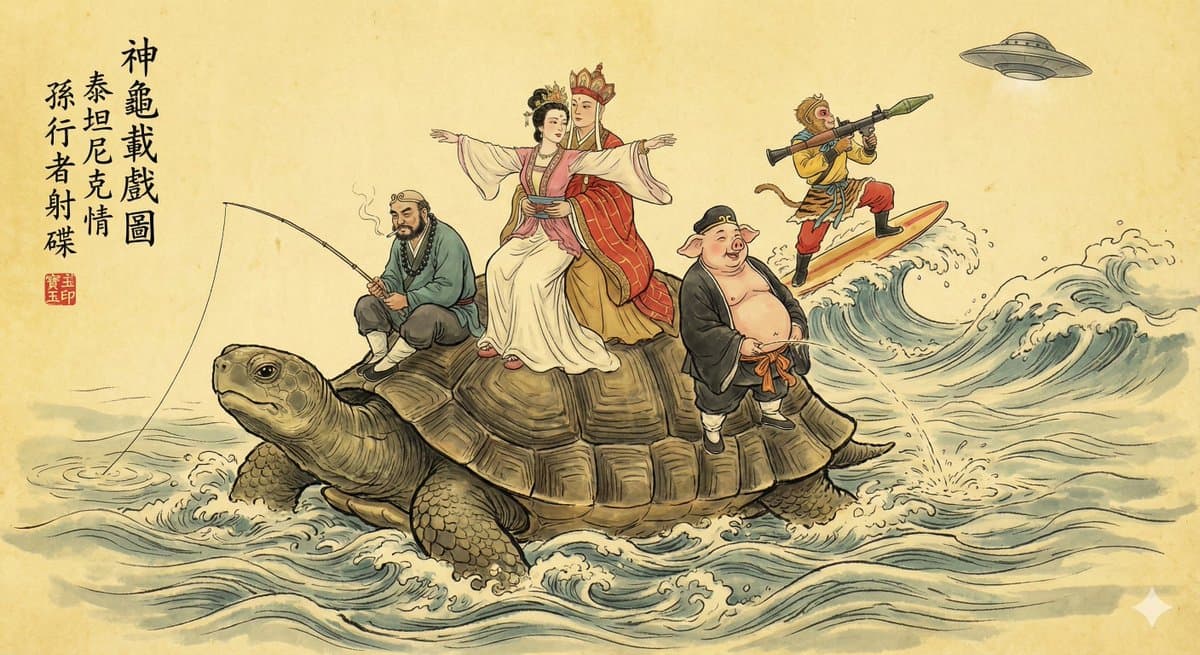
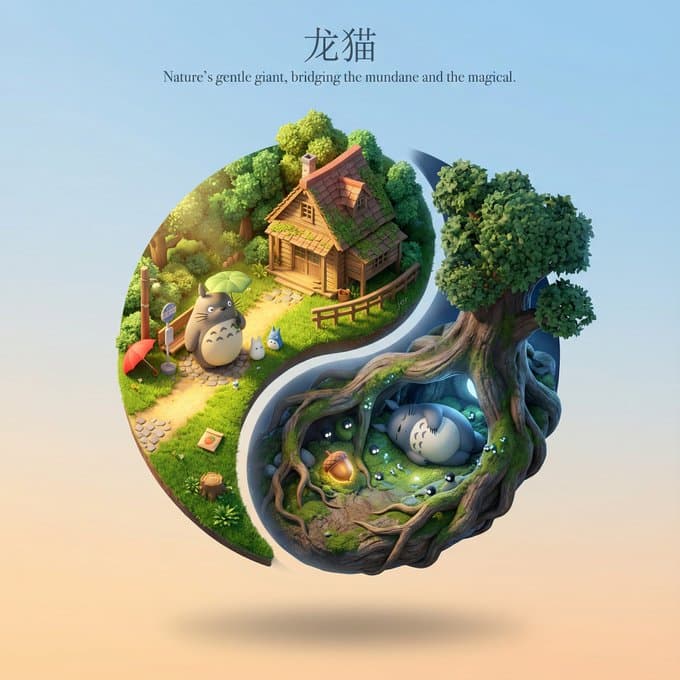
This is a floating Tai Chi cute 3D cartoon diorama scene, ideally generated with the Gempix2 or Nano Banana 2 models for a stylized, symmetrical look. It's perfect for creating unique branding emblems, social media graphics, or illustrative content for wellness and creative industries. Consider using keywords like "isometric 3D icon" or "yin-yang art" for best results.
Prompt 1
A clear, floating cute 3D cartoon diorama scene in a circular composition with rotational symmetry, echoing a yin-yang layout:
Scene:
- a single floating circular emblem viewed from isometric bird's-eye perspective (45° angle looking down).
- one swirling half of the circle shows [Subject]'s most iconic defining scene or aspect (primary realm).
- the opposite swirling half is the contrasting opposite realm, occupying the complementary yin-yang territory.
- both realms share the same gravity direction and isometric orientation.
- each half may be a continuous shared landmass OR two structurally separate diorama units that curve around each other, forming a recognizable yin-yang composition.
Interpret narrative essence:
- treat [Subject] as ONE overarching theme or entity with TWO conflicting aspects.
- let each realm embody one aspect in a clear, visual way: the first half leans into aspect A, the opposite half leans into aspect B.
- use characters only where they naturally serve the contrast: they may appear in one realm, both realms, or take different forms — repetition is optional, never a strict requirement.
- place 2 distinct symbolic objects, each rooted naturally in its own world, echoing each other across the curve to suggest what was abandoned or gained between these two aspects.
Yin-yang relationship:
- design the two realms as interlocking, yin-yang-like shapes inside the circle: interlocking territories that echo yin-yang flow.
- place the most focal element of each realm at its "yin-yang eye" position — the visual anchor point within each half's territory.
- the two realms should feel spatially intimate and cohesive — bring them closer together to create a unified, compact circular emblem rather than loosely scattered islands.
- the two halves are typically structurally separate with a subtle atmospheric gap, but may share ground where narrative calls for it — when adjoining, boundaries flow naturally through lighting, color temperature, and ground material shifts.
- edge treatment: encourage organic overflow at key points — tall structures gently break the circular silhouette, ground edges fade atmospherically rather than clip sharply.
Composition:
- clean, dramatic circular multiverse — the circle reads as one unified, spatially compact emblem, with two interlocking narrative poles sitting close and relating to each other.
- amplify contrast between the two realms: maximize visual tension to make the duality unmistakable.
- vast open view: the scene extends naturally to its edges without boundary walls, fences, or enclosures — the horizon remains visible and unobstructed.
Shadow:
BARELY visible, extremely soft non-contact shadow with expansive fadeout — extends well beyond the diorama's footprint with a gentle gradient that blurs into the background. Viewed from bird's-eye perspective, nearly circular in shape.
Render:
- C4D. high poly with soft shading, rounded edges and bevels.
- realistic PBR materials with tactile authenticity — avoid glossy plastic or resin appearance.
- intricate textures, delicate detail, vivid harmonized colors. SSS texture:true.
- CRITICAL: ground planes must remain flat and level with natural material textures appropriate to each realm.
Background:
- a single unified, clean, subtle gradient sky as the shared environment of both realms, providing generous breathing space around the circular diorama.
Typography (top-center, cinematic poster-style design):
- a prominent title "[Subject]" in a slim elegant serif (remove the brackets).
- beneath it, a poetic, insightful subtitle that distills the story’s deepest truth or tension into one profound line.
- create clear visual hierarchy through scale and weight contrast; allow auto line wrap and slight overlap with the top of the circle if needed.
Enhance:
- professional cinematic lighting, shaped to emphasize the contrast between the two realms while keeping both legible.
- if characters are present, use dynamic, emotionally expressive poses that clearly align with the aspect of their realm.
- strong sense of visual depth within each realm.
Scene / lighting / cultural aesthetics:
- contextually appropriate to [Subject].
Negative:
- [cropped elements at canvas edges, plastic/resin, hard cartoon outlines, underexposed, creepy, ceiling].
ar=1:1
[Subject] =
Prompt 2
一个清晰、漂浮的可爱3D卡通立体场景,采用圆形构图,具有旋转对称性,呼应了阴阳布局:
场景:
- 从等距鸟瞰视角(45°角观察)看到的单个漂浮的圆形标志down) 。
- 圆圈的一半旋转,代表[主题]最具标志性的定义场景或方面(主要领域)。
- 与之相对的漩涡状的一半是对比鲜明的对立领域,占据着互补的阴阳领域。
- 两个领域具有相同的重力方向和等距方向。
- 每一半可以是连续的共享陆地,也可以是两个结构上独立的立体模型单元,它们相互环绕,形成可辨认的阴阳图案。
解读叙事精髓:
- 将[主题]视为一个具有两个相互冲突的方面的总体主题或实体。
- 让每个领域以清晰、直观的方式体现一个方面:前半部分倾向于方面 A,后半部分倾向于方面 B。
- 只在自然而然地起到对比作用的地方使用人物:他们可以出现在一个领域,两个领域,或者以不同的形式出现——重复是可选的,绝不是严格的要求。
- 放置两个截然不同的象征性物体,每个物体都自然地扎根于自己的世界中,在曲线上相互呼应,以暗示这两个方面之间放弃了什么或获得了什么。
阴阳关系:
- 将这两个领域设计成圆圈内相互交错的阴阳形状:相互交错的领域呼应阴阳流动。
- 将每个领域中最关键的元素放置在其“阴阳眼”位置——即每个半领域内的视觉锚点。
- 这两个领域应该在空间上感觉亲密且连贯——将它们拉近,创造一个统一、紧凑的圆形标志,而不是松散分散的岛屿。
- 这两个部分通常在结构上是分开的,存在微妙的氛围上的隔阂,但在叙事需要时可能会共享空间——当相邻时,边界会通过光照、色温和地面材料的变化自然流动。
- 边缘处理:鼓励在关键点自然溢出——高大的建筑轻轻地打破圆形轮廓,地面边缘以大气的方式淡化,而不是生硬地裁剪。
作品:
- 干净、戏剧性的圆形多元宇宙——圆圈被视为一个统一的、空间紧凑的象征,两个相互交错的叙事极紧密相连,彼此关联。
- 增强两个领域之间的对比:最大限度地增强视觉张力,使二元性显而易见。
- 广阔的开阔视野:景色自然延伸到边缘,没有边界墙、栅栏或围栏——地平线仍然可见且无遮挡。
阴影:
几乎难以察觉的、极其柔和的非接触式阴影,边缘逐渐淡出——远远超出立体模型的范围,并以柔和的渐变过渡到背景中。从鸟瞰视角看,阴影形状近乎圆形。
使成为:
- C4D。高精度模型,柔和阴影,圆角和倒角。
- 逼真的 PBR 材料,触感真实——避免光亮的塑料或树脂外观。
- 纹理精细,细节精致,色彩鲜艳和谐。SSS纹理:是。
- 关键:地面必须保持平坦,并采用适合各个领域的自然材料纹理。
背景:
- 一片统一、干净、柔和的渐变天空作为两个世界的共同环境,为圆形立体模型周围提供了广阔的呼吸空间。
字体设计(顶部居中,电影海报风格设计):
- 一个醒目的标题“[主题]”,采用纤细优雅的衬线字体(去掉括号)。
——在其下方,有一句富有诗意和洞察力的副标题,将故事最深刻的真相或紧张感提炼成一句意味深长的句子。
- 通过比例和粗细对比创建清晰的视觉层次;允许自动换行,并在需要时与圆的顶部略微重叠。
提高:
- 专业电影灯光,旨在强调两个领域之间的对比,同时保持两者清晰可辨。
- 如果人物出现,请使用动态的、富有情感表现力的姿势,这些姿势应与他们所处领域的特征明显相符。
- 每个领域都具有强烈的视觉深度感。
场景/灯光/文化美学:
- 与[主题]的语境相符。
消极的:
- [画布边缘的裁剪元素、塑料/树脂、硬卡通轮廓、曝光不足、令人毛骨悚然、天花板]。
ar=1:1
[主题] =